Similarly to movies, TV shows have often impacted how cities are seen by the general public. How many people must have experienced watching an episode of Friends (1994-2004) or How I Met Your Mother (2005 -2014) and imagining how fun it must be to be an adult in New York City? Or being a teenager and having series such as Skins (2007-2013) and Skam (2015-2017) making you wish you could go through this crazy time in life in cities like Bristol or Oslo?
However, how does it feel for the people who live in cities showcased on TV to see how others perceive and imagine them and their experiences?
Sex and the City (1998-2004), created by Darren Star for HBO
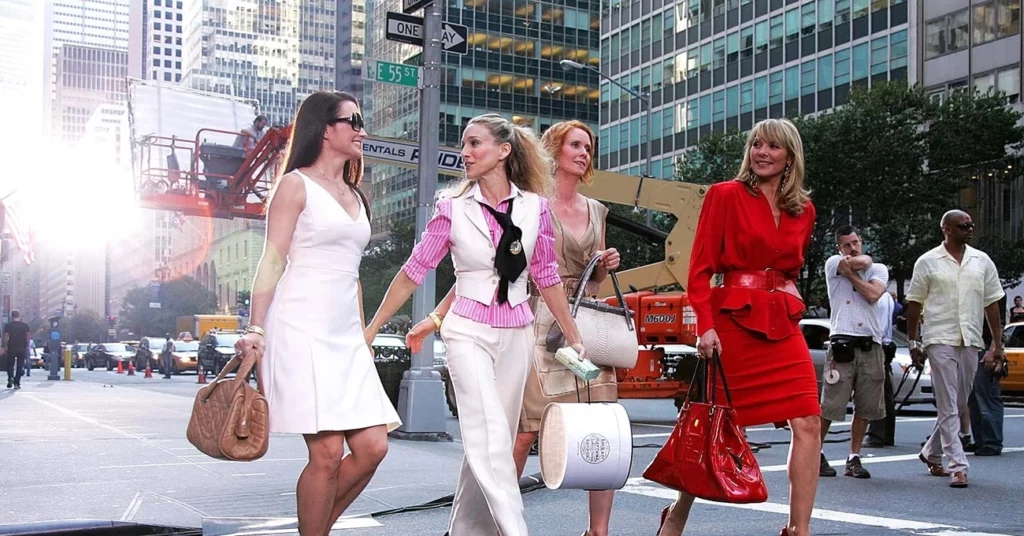
This iconic TV showis a quintessential portrayal of New York City, focusing on the lives of four women navigating careers, relationships, and friendships in Manhattan. The series has been both praised and criticized for its glamorous depiction of the city. While it highlights famous locations and social scene, it often glosses over the everyday challenges faced by typical New Yorkers (Daily Orange, 2009).
Sex and the City has positively influenced the perception of New York City, further establishing its image as a place of opportunity, fun, and diversity. The show has fostered a sense of identification among residents, particularly for those who relate to the characters and hope to live a similar life. By celebrating the city’s unique blend of cultures and lifestyles, the HBO series has helped reinforce New York’s reputation as a cosmopolitan and exciting city.
Emily in Paris (2020-), created by Darren Star for Netflix.
Despite having the same creator as Sex and the City, Emily in Paris has drawn criticism for its reliance on clichés and stereotypes about French culture, often portraying Parisians as aloof, fashion-obsessed, and resistant to change, perpetuating simplistic and inaccurate views of the city’s residents (Screen Rant, 2021).
These portrayals can have negative effects, reinforcing outdated stereotypes and contributing to a superficial understanding of French culture. This can affect both how Parisians are perceived internationally and how they perceive themselves, even leading to the feeling that they are being “mocked” by the production (De Oliveira & Smith, 2022). The caricatured depictions risk overshadowing the city’s rich, multifaceted reality, reducing Paris to a series of romantic tropes rather than a vibrant, diverse metropolis.